
In recent years, there has been fast development within the area of vehicular ad hoc networks (VANET). In the future, VANET communication will play a first-rate position in improving the protection and performance of the transportation system. If security isn't always furnished in VANET, then it may result in apparent misapplication. One of the dangerous or risky attacks in VANETs is the Sybil, which forges fake identities inside the network to disrupt or compromise the communication among the network nodes. Sybil attacks have an effect on the carrier transport associated with road safety, traffic congestion, multimedia entertainment and others. Thus, VANETs claim for a security mechanism to prevent Sybil attacks. Within this context, this paper proposes a mechanism, known as Sybil Attack Prevention and Detection Mechanism in VANET based on Multi-Factor Authentication (SAPDMV), to detect Sybil attacks in VANETs based on Multi-Factor Authentication. The proposed system works based on the principle of registration, and use identification number, status, Maximum and minimal threshold value and security key for the verification. The paper proposes a Sybil Attack Prevention and Detection Mechanism in VANET (SAPDMV) based on multifactor authentication. The mechanism uses vehicle identification, status, security key, and both minimum and maximum speed thresholds to authenticate nodes and detect Sybil attacks. Implemented and tested using Network Simulator-2.35, the system demonstrates an improved detection rate, reduced false positive and false negative rates, and enhanced network performance metrics such as end-to-end delay, throughput, and packet delivery ratio. The simulation result shows our proposed algorithm enhances detection rate, false positive rate, and false negative rate. The proposed solution is improved to 96%, 5%, and 4%, respectively, compared with the Sybil attack-AODV and existing/old work. The approach is scalable and effective in real-world VANET environments, making it a promising framework for future intelligent transportation systems.
| Published in | International Journal of Information and Communication Sciences (Volume 11, Issue 1) |
| DOI | 10.11648/j.ijics.20261101.11 |
| Page(s) | 1-12 |
| Creative Commons |
This is an Open Access article, distributed under the terms of the Creative Commons Attribution 4.0 International License (http://creativecommons.org/licenses/by/4.0/), which permits unrestricted use, distribution and reproduction in any medium or format, provided the original work is properly cited. |
| Copyright |
Copyright © The Author(s), 2026. Published by Science Publishing Group |
Sybil Attack, Multi-factor Authentication, Detection Rate, False Positive Rate and False Negative Rate
Author/Reference | Simulation | Method | Strength | Weakness |
|---|---|---|---|---|
Soyoung Park [7] | NS2/Custom | Time Stamp Series | Detects Sybil nodes using time stamp similarity | Detection slow if RSUs are far apart; ineffective if attacker stays under one RSU |
Pareek et al. [8] | NS2/Custom | MAC Address Check | Prevents duplicate MAC addresses | MAC addresses can be spoofed by attackers |
P. Gu et al [9] | NS2/Custom | Machine Learning (KNN, SVM) | High accuracy in classification | High runtime complexity; limited to light traffic and rational model attacks |
Hamed et al. [10] | NS2/Custom | Infrastructure Observation | Observes moving dynamics for detection | Requires RSU synchronization; soft identification reduces efficiency |
Reddy et al. [11] | NS2/Custom | Digital Signatures | Uses encrypted signatures for identity verification | Does not consider vehicle mobility; limited in high mobility/density |
Sharma et al. [12] | NS2/Custom | Short-lived Pseudo Certificates | Provides privacy and anonymity | Depends on vehicle feedback; does not consider vehicle behavior |
Eziama et al. [13] | NS2/Custom | Bayesian Neural Network | Probabilistic modeling for node identification | Does not consider mobility patterns; lacks adaptability |
Saggi & Kaur [6] | NS2/Custom | Neighboring Information | Uses identification and speed threshold | Does not check vehicle status; cannot detect internal malicious nodes |
Parameters | Value |
|---|---|
Simulator NS2 | Version Ns-allinone-2.35 |
Simulation Area (Grid Size) | 3m x 3000m |
Total number of nodes | 50 |
Number Simulated node | 10,15,20,25,30,35,40,45,50 |
Number of malicious nodes | 36,38,40,49 |
Number of static nodes | 21,22,24,27,28,29,30,33 |
Maximum Vehicle speed | 50m/s |
Minimum vehicle speed | 20m/s |
Routing protocol | AODV |
Packet size | 512kb |
Packet type | TCP |
Node Communication range | 3000m |
Simulation Time | 150sec |
Antenna model | Omnidirectional Antenna |
VANET | Vehicular Ad hoc Networks |
SAPDMV | Sybil Attack Prevention and Detection Mechanism in VANET |
AODV | Ad Hoc On Demand Distance Vector |
OBU | On Board Unit |
RSU | Road Side Unit |
DSRC | Dedicated Short Range Communication |
MANET | Mobile Ad-hoc Networks |
ITS | Intelligent Transportation System |
KNN | K-Nearest Neighbors |
SVM | Support Vector Machine |
MAC | Media Access Control |
NS2 | Network Simulator 2 |
V2V | Vehicle-to-Vehicle |
V2I | Vehicle-to-Infrastructure |
ID | Identification |
DR | Detection Rate |
FNR | False Negative Ratio |
FPR | False Positive Ratio |
E2E | End-to-End |
PDR | Packet Delivery Ratio |
| [1] | K. Tanuja, “A Survey on VANET Technologies,” vol. 121, no. 18, pp. 1–9, 2015. |
| [2] | P. Gu, R. Khatoun, Y. Begriche, A. Serhrouchni, and T. Paristech, “Vehicle Driving Pattern Based Sybil Attack Detection,” pp. 1282–1288, 2016, |
| [3] | S. A. Syed, “Merged technique to prevent SYBIL Attacks in VANETs,” 2019 Int. Conf. Comput. Inf. Sci., pp. 1–6, 2019. |
| [4] | I. Transportation, S. Committee, I. Vehicular, and T. Society, IEEE Guide for Wireless Access in Vehicular Environments (WAVE) Architecture IEEE Vehicular Technology Society. 2013. |
| [5] | M. Khalil and M. A. Azer, “Scheme in Vehicular Ad-Hoc Networks,” pp. 184–186, 2018. |
| [6] | M. K. Saggi, “Isolation of Sybil Attack in VANET using Neighboring Information,” pp. 46–51, 2015. |
| [7] | J. Grover, “A Sybil Attack Detection Approach using Neighboring Vehicles in VANET,” pp. 151–158, 2011. |
| [8] | A. Pareek, “Detection and Prevention of Sybil Attack in MANET using MAC Address,” vol. 122, no. 21, pp. 20–23, 2015. |
| [9] | P. Gu, R. Khatoun, Y. Begriche, A. Serhrouchni, and T. Paristech, “k-Nearest Neighbours Classification Based Sybil Attack Detection in Vehicular Networks”. |
| [10] | H. Hamed, “Sybil Attack Detection in Urban VANETs Based on RSU Support,” Electr. Eng. (ICEE), Iran. Conf., pp. 602–606, 2018, |
| [11] | D. S. Reddy and V. Bapuji, “Sybil Attack Detection Technique Using Session Key Certificate in Vehicular Ad Hoc Networks,” pp. 2–6. |
| [12] | A. K. Sharma, “Sybil Attack Prevention and Detection in Vehicular Ad hoc Network,” pp. 594–599, 2016. |
| [13] | E. Eziama, K. Tepe, A. Balador, K. S. Nwizege, and L. M. S. Jaimes, “Malicious Node Detection in Vehicular Ad-Hoc Network Using Machine Learning and Deep Learning,” 2018 IEEE Globecom Work. (GC Wkshps), pp. 1–6, 2018. |
| [14] | S. Agrawal and R. Lingawar, “Application of Ns2 To Overcome Computer Networks Attacks,” World Res. J. Comput. Archit., vol. 1, no. 1, pp. 6–10, 2012. |
APA Style
Tadesse, E. M., Girma, A., Mebrte, A. (2026). Sybil Attack Prevention and Detection Mechanism in VANET Based on Multi-factor Authentication. International Journal of Information and Communication Sciences, 11(1), 1-12. https://doi.org/10.11648/j.ijics.20261101.11
ACS Style
Tadesse, E. M.; Girma, A.; Mebrte, A. Sybil Attack Prevention and Detection Mechanism in VANET Based on Multi-factor Authentication. Int. J. Inf. Commun. Sci. 2026, 11(1), 1-12. doi: 10.11648/j.ijics.20261101.11
@article{10.11648/j.ijics.20261101.11,
  author = {Ermias Melku Tadesse and Abubeker Girma and Abebaw Mebrte},
  title = {Sybil Attack Prevention and Detection Mechanism in VANET Based on Multi-factor Authentication},
  journal = {International Journal of Information and Communication Sciences},
  volume = {11},
  number = {1},
  pages = {1-12},
  doi = {10.11648/j.ijics.20261101.11},
  url = {https://doi.org/10.11648/j.ijics.20261101.11},
  eprint = {https://article.sciencepublishinggroup.com/pdf/10.11648.j.ijics.20261101.11},
  abstract = {In recent years, there has been fast development within the area of vehicular ad hoc networks (VANET). In the future, VANET communication will play a first-rate position in improving the protection and performance of the transportation system. If security isn't always furnished in VANET, then it may result in apparent misapplication. One of the dangerous or risky attacks in VANETs is the Sybil, which forges fake identities inside the network to disrupt or compromise the communication among the network nodes. Sybil attacks have an effect on the carrier transport associated with road safety, traffic congestion, multimedia entertainment and others. Thus, VANETs claim for a security mechanism to prevent Sybil attacks. Within this context, this paper proposes a mechanism, known as Sybil Attack Prevention and Detection Mechanism in VANET based on Multi-Factor Authentication (SAPDMV), to detect Sybil attacks in VANETs based on Multi-Factor Authentication. The proposed system works based on the principle of registration, and use identification number, status, Maximum and minimal threshold value and security key for the verification. The paper proposes a Sybil Attack Prevention and Detection Mechanism in VANET (SAPDMV) based on multifactor authentication. The mechanism uses vehicle identification, status, security key, and both minimum and maximum speed thresholds to authenticate nodes and detect Sybil attacks. Implemented and tested using Network Simulator-2.35, the system demonstrates an improved detection rate, reduced false positive and false negative rates, and enhanced network performance metrics such as end-to-end delay, throughput, and packet delivery ratio. The simulation result shows our proposed algorithm enhances detection rate, false positive rate, and false negative rate. The proposed solution is improved to 96%, 5%, and 4%, respectively, compared with the Sybil attack-AODV and existing/old work. The approach is scalable and effective in real-world VANET environments, making it a promising framework for future intelligent transportation systems.},
 year = {2026}
}
TY  - JOUR
T1  - Sybil Attack Prevention and Detection Mechanism in VANET Based on Multi-factor Authentication
AU  - Ermias Melku Tadesse
AU  - Abubeker Girma
AU  - Abebaw Mebrte
Y1  - 2026/01/23
PY  - 2026
N1  - https://doi.org/10.11648/j.ijics.20261101.11
DO  - 10.11648/j.ijics.20261101.11
T2  - International Journal of Information and Communication Sciences
JF  - International Journal of Information and Communication Sciences
JO  - International Journal of Information and Communication Sciences
SP  - 1
EP  - 12
PB  - Science Publishing Group
SN  - 2575-1719
UR  - https://doi.org/10.11648/j.ijics.20261101.11
AB  - In recent years, there has been fast development within the area of vehicular ad hoc networks (VANET). In the future, VANET communication will play a first-rate position in improving the protection and performance of the transportation system. If security isn't always furnished in VANET, then it may result in apparent misapplication. One of the dangerous or risky attacks in VANETs is the Sybil, which forges fake identities inside the network to disrupt or compromise the communication among the network nodes. Sybil attacks have an effect on the carrier transport associated with road safety, traffic congestion, multimedia entertainment and others. Thus, VANETs claim for a security mechanism to prevent Sybil attacks. Within this context, this paper proposes a mechanism, known as Sybil Attack Prevention and Detection Mechanism in VANET based on Multi-Factor Authentication (SAPDMV), to detect Sybil attacks in VANETs based on Multi-Factor Authentication. The proposed system works based on the principle of registration, and use identification number, status, Maximum and minimal threshold value and security key for the verification. The paper proposes a Sybil Attack Prevention and Detection Mechanism in VANET (SAPDMV) based on multifactor authentication. The mechanism uses vehicle identification, status, security key, and both minimum and maximum speed thresholds to authenticate nodes and detect Sybil attacks. Implemented and tested using Network Simulator-2.35, the system demonstrates an improved detection rate, reduced false positive and false negative rates, and enhanced network performance metrics such as end-to-end delay, throughput, and packet delivery ratio. The simulation result shows our proposed algorithm enhances detection rate, false positive rate, and false negative rate. The proposed solution is improved to 96%, 5%, and 4%, respectively, compared with the Sybil attack-AODV and existing/old work. The approach is scalable and effective in real-world VANET environments, making it a promising framework for future intelligent transportation systems.
VL  - 11
IS  - 1
ER  -
Information Technology, Wollo University, Kombolcha, Ethiopia
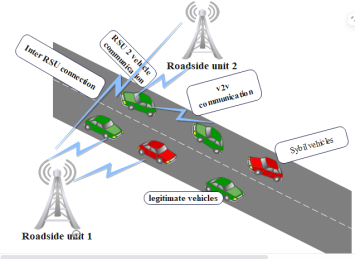
Figure 1. VANET proposed architecture.
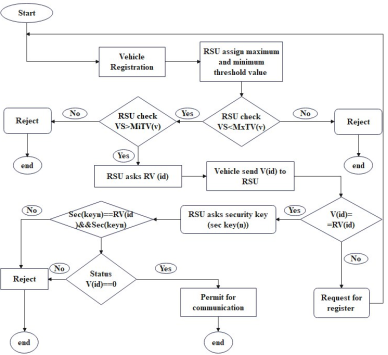
Figure 2. Flowchart for proposed methodology.
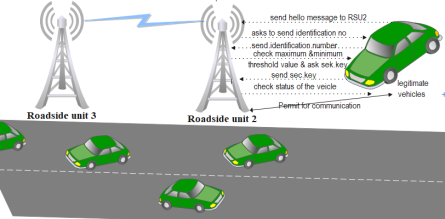
Figure 3. Legitimate vehicle detection.
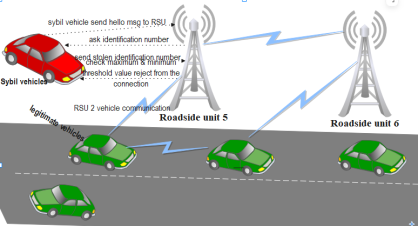
Figure 4. Sybil vehicle detection.
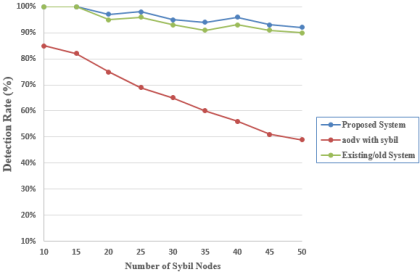
Figure 5. Detection Rate comparison under Sybil attack.
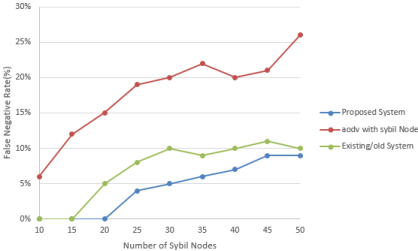
Figure 6. False Negative Ratio under Sybil attack.
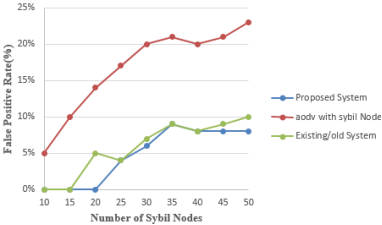
Figure 7. False Positive Ratio under Sybil attack.
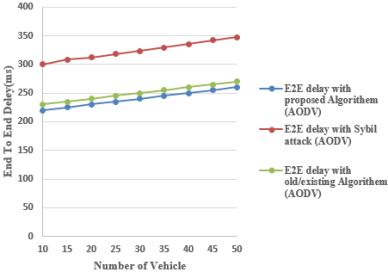
Figure 8. E2E delay respect to No of vehicles.
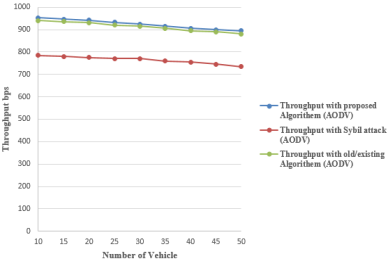
Figure 9. Throughput respect to No of vehicles.
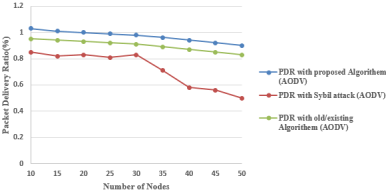
Figure 10. PDR respect to No of vehicles.




 Share This Article
 Twitter
 Linked In
 Facebook
 Copy
Copy Download